
When a Property Investor Was Forced to Challenge High Clearance Figures — and Changed the Law
A real story of risk, pressure and persistence behind Municipal Debt Specialist
This is the story of how a property investment business, through years of real experience and legal battles, developed into a specialist firm — and in the process, helped shape how the law is applied in South Africa today, all stemming from rates clearance figures.

Livanos Wins in Constitutional Court – read more
Where It All Began
Most businesses begin with an idea. Some begin with a gap in the market. This one began with a crisis that very nearly destroyed an entire property company.
Long before the name Municipal Debt Specialist existed, Livanos was simply operating a property investment and redevelopment business known as New Ventures Properties…
At the time, the process was relatively straightforward…
For a time, the system worked.
Then, without warning, something began to change.

Read more: the origins of rates clearances
The Problem That No One Could Explain
A Law Changes — But Understanding Doesn’t – Rates Clearance Figures
Around 2001 and 2002, a new law came into effect called Section 118 of the Municipal Systems Act. Before this, under the older system (often referred to as Ordinance 50), things were much simpler — it was generally understood that all the municipal amounts showing on the rates clearance figures had to be paid in full before a property could be transferred. That was how most people and municipalities worked at the time.
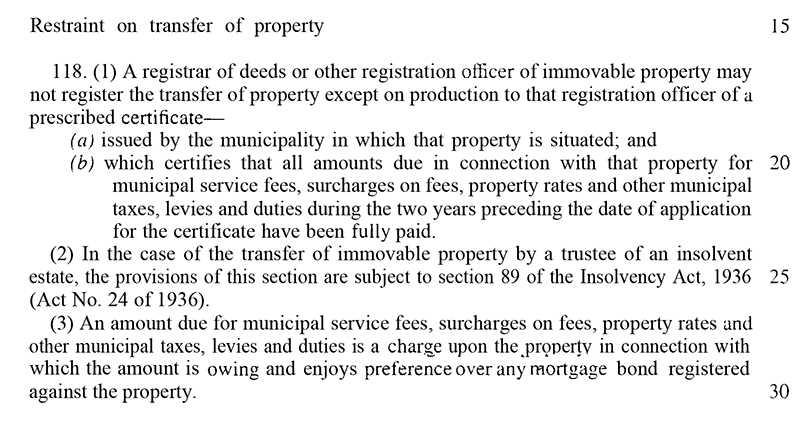
Read more: Section 118 as extracted from Local Government Municipal Systems Act 32 of 2000
Interestingly, even today, many property professionals still think the same way and believe that once a municipal rates clearance certificate is issued, it means that all debts on the account have been fully paid. However, that is not always correct. When Section 118 came in, the legal position became more complicated, and although the law had changed, people’s understanding of it had not caught up. At that time, very few people fully understood how it worked in practice — including many officials within the municipalities themselves.
A Pattern Starts to Emerge
It was during this period that Livanos began to notice a deeply troubling pattern.
How Auction Buyers Calculate Costs
When properties are sold at sheriff auctions, the buyer is usually responsible for paying any outstanding municipal rates and taxes before the property can be transferred into their name. At the auction, buyers are given an estimate of what those amounts are, and they rely on those figures when deciding how much to bid.

Read more: Conditions of Sale – Sheriff Sale in Execution
The Numbers Don’t Match
The problem was that these figures were often very different from the actual amounts later required by the municipality when the transfer process started.
These were not small differences that could be ignored.
For example, a property that appeared to have about R50,000 on the day of the auction owing could later require R500,000 or more just to get the required rates clearance certificate and complete the transfer.
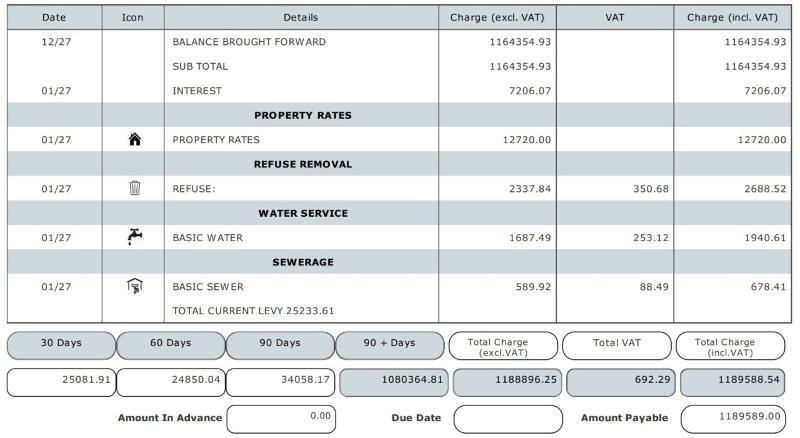
Statement DOES NOT always reflect True Debt – Read more: How fear is being exploited
A Systemic Problem — Not a Once-Off
This completely changed the deal, turning what looked like a good investment into a very risky one.
And this was not a once-off mistake — it was happening again and again.

Why This Was So Dangerous for a Purchaser
Buying “As Is” Means Taking All the Risk
In South Africa, when you buy a property at a sheriff auction, you are buying it “voetstoots” (as it is). This means you as the buyer take on all the risks. If something is wrong, there is usually no one you can hold responsible.
No Guarantees on the Information Given
In the early 2000s, the position at sheriff auctions was very clear. The sheriff does not guarantee that the information given at the auction is correct.
The bank selling the property also does not guarantee the figures. In fact, this is something they make very clear at every auction. Although the law has evolved over time, this basic principle has remained the same.
So if the numbers are wrong, the buyer has very little protection.

Once You Bid, You Are Committed
At the same time, once your bid is accepted, you are legally required to go through with the purchase. You cannot simply walk away because the costs turn out to be higher than expected.
A Growing Problem Across Multiple Properties
This put New Ventures Properties in a very difficult position.
Several properties had already been bought based on the figures given at the auction. Deposits had been paid, finance had been arranged, and everything was moving forward as planned.
But when the real municipal amounts came through, everything changed.
High Clearance Figures Changed Everything
The properties could no longer be transferred because the municipal rates and taxes clearance figures were far higher than expected. What had seemed like sensible investments suddenly became risky or even impossible to complete.

Read more: All you need to know about Rates Clearance Figures | Example
The Real Risk: Action from the Banks
But the real danger went even further than that.
Because once the properties were bought, Livanos was legally required to complete the purchases. If he could not do so because of these unexpected municipal amounts, the banks had the right, under the auction conditions, to take action against him.
This could include cancelling the deals, keeping the deposits that had already been paid, and even claiming additional damages for any losses they suffered.
Being Held Responsible for Something Out of His Control
In simple terms, he could have been held responsible for losses caused by figures that were completely out of his control — figures coming from the municipality that were not correctly disclosed at the auction.

The Pressure Builds
As more of these problems arose across multiple properties, the financial pressure increased very quickly. This was no longer just about a bad investment — it created a real risk of serious losses and could even have led to the collapse of the entire business.
There Was No Clear Path Forward
At the time, this was still very new territory. There was no established process, no clearly defined industry approach, and very little practical guidance on how Section 118 should be applied in real situations. Even within the legal and property sectors, many professionals were still working through how the law should operate in practice.
Faced with growing pressure and no clear solution available, Livanos was left with little choice but to start working through the problem himself, step by step, using the information and resources available at the time.
From Survival to Finding a Solution – High Rates Clearance Figures
This Was Not Planned — It Was Necessary
What happened next was not part of a business plan.
It was something that had to be done to survive.
Trying to Understand the Problem Properly
Livanos started to work through the problem step by step.
He looked closely at the law, the way municipal accounts were put together, and how the charges were being applied in real situations. Municipal bylaws were studied, legislation and court judgments were carefully considered the Subsections of Section 118 were scrutinised thoroughly and researched.
The key question he needed to answer was simple:
What does the law actually require to be paid to get a valid municipal rates clearance certificate as well as perform legal full and final settlement reductions?

Read more: Section 118 Is NOT Discount
Something Important Became Clear
As he worked through this, a clear pattern started to appear.
The amounts being claimed were not always correct.
Some charges should not have been included at all.
Others had been added incorrectly or did not match what the law allowed.
A Practical Way to Fix the Problem
By carefully checking each account, Livanos developed systems, auditing techniques and methodologies to:
- review the figures
- identify mistakes
- work out the correct amount that should legally be paid
This meant that instead of simply accepting the figures given, the amounts could be tested and corrected.
Tested in Real Situations
This was not just an idea.
It was used straight away on real properties that were under pressure to transfer. The results made it possible to move transactions forward that otherwise would have been stuck.

When Cooperation Failed, Litigation Became Unavoidable
Before approaching the courts, attempts were made to resolve matters directly with the municipalities. The discrepancies were explained, and corrected calculations were presented.
However, these efforts were largely unsuccessful.
The legislation was still new, systems were not aligned, and there was little willingness or ability to reconsider the figures being issued. Meanwhile, the urgency remained — properties needed to transfer, and the financial risk continued to grow.
With the municipalities unwilling to engage, and the banks beginning to take legal steps — including placing Livanos in breach of the auction agreements and preparing to claim damages — he was suddenly facing the real risk of losing all the money tied up in these properties. Under that level of legal and financial pressure, he had no choice and was forced to approach the High Court on an urgent basis to protect his rights.
The objective was straightforward: to break the deadlock with the municipality and allow the properties to be transferred.
What followed became a turning point.
The matters were resolved, and the approach that Livanos had developed to check and correct the municipal rates and taxes clearance figures was accepted. The properties that had been stuck were finally able to transfer, and what had started as a desperate effort to survive had now been proven to work in real situations.
From Litigation to Collaboration
In an unexpected development, this was not the end of the relationship with the municipality.
Over time, a constructive working relationship developed between New Ventures Consulting & Services (as it would soon become) and Ekurhuleni. The same expertise that had been used to challenge incorrect figures was now being used to assist in identifying errors, improving processes and addressing systemic issues.
For a period, the relationship was highly collaborative and mutually beneficial.

The Birth of New Ventures Consulting & Services (New Ventures)
At the same time, something else was happening.
The transferring attorneys involved in these matters — many of whom were among the leading firms in the country acting for major banks — began to take notice. They saw transactions that should have failed being successfully concluded. They saw significant, lawful reductions in municipal clearance figures.
And they recognised that this was not an isolated issue.
They began asking Livanos if he could assist their other clients facing similar problems.
That demand led to the creation of a new entity: New Ventures.
The business was not created from theory or speculation. It was built directly from real-world experience, with a clear purpose — to help others facing the same problem.
A Growing Need Across the Industry
As the work expanded, it became clear just how widespread the issue was.
Clients from all areas of the property market began seeking assistance, including:
- private buyers and sellers
- investors
- banks and financial institutions
- estate agents
- attorneys
Across all these matters, the core issue remained the same:
High and often incorrect municipal rates and taxes clearance figures were preventing property transfers.

Read more: Section 118 of the Municipal Systems Act
By applying the same structured approach, New Ventures was able to resolve thousands of matters and facilitate transfers that might otherwise have collapsed. This incredible consulting practice went on to help thousands of properties stakeholders save exorbitant amount on how clearance figures creating astronomical savings and reductions legally and fast.
A Second Wave of Problems — Everything Changes Again
For Years, Things Worked
For many years after the first legal battles, things started to work more smoothly.
Properties were being transferred, the correct municipal rates and taxes clearance figures were being calculated and reduced by New Ventures for countless clients, and transactions were able to move forward with far fewer problems. The system, while not perfect, had become more stable.
Then, Around 2013, Everything Changed
Around 2013, a new problem suddenly emerged, and it came as a shock to the property industry.
This change was linked to a court case involving the City of Tshwane and a property owner named Mathabatha. In that matter, it appeared that the parties involved in the transfer had followed what many believed was acceptable at the time — paying what was understood to be the minimum amount required to obtain a rates and taxes clearance certificate, rather than settling all historic amounts on the account.
The municipality challenged this approach and took legal action to stop the transfer from going through. The court ultimately ruled in favour of the municipality, allowing it to block the transfer based on the outstanding amounts.
Why This Was So Important
This case gave municipalities much stronger power under Section 118(3) of the law.
As a result, municipalities began taking the position that even after a property was sold, they could still insist that old debts — going back to previous owners — had to be paid before they would allow services or fully recognise the new owner.
The Impact on Property Buyers
This created a serious problem.
People who had:
- bought properties legally
- paid the correct municipal clearance figures
- successfully transferred the property into their names
were now being told that they could still be held responsible for debts that did not belong to them.
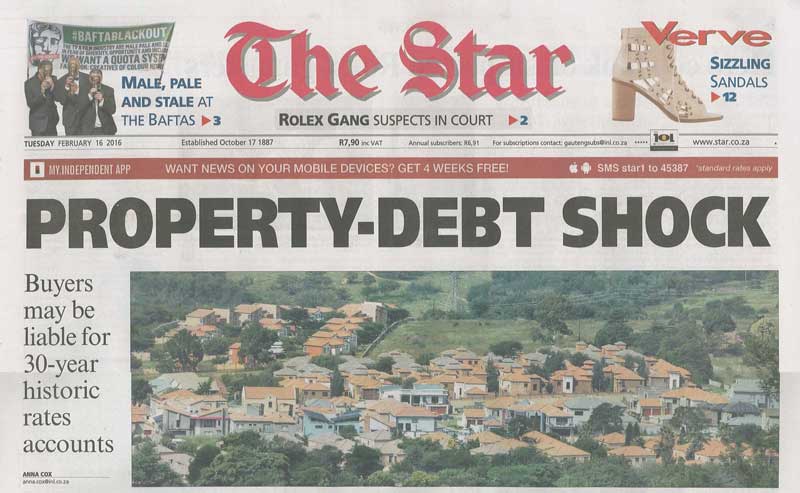
Read more: The Star newspaper exposes New Ventures court case and message
The Industry Is Thrown Into Uncertainty
Almost overnight, the property market was thrown into confusion.
Buyers, sellers, attorneys, and banks were all affected. Transactions became uncertain again, and people who had done everything correctly suddenly found themselves at risk.
Even though the problem had originally been addressed years earlier, this new legal development created a whole new layer of difficulty that had to be challenged once again.
The Problem Returns — Bigger Than Before
Once again, Livanos found himself at the centre of the problem — but this time, it was even broader and more serious than before.
He was still actively running New Ventures Properties, continuing to buy and sell properties on a large scale. Over the years, many properties had already been transferred, with municipal amounts settled and accepted at the time. These were deals that everyone believed had been properly concluded.
However, after the Mathabatha judgment, everything changed.
Suddenly, municipalities began going back to properties that had been transferred years earlier and started raising old debts again. In many cases, these were amounts linked to previous owners going back many years.
What made this possible is that, under South African law, municipalities have a much longer period to enforce these types of debts. While most normal debts fall away after a few years if they are not collected, municipal charges such as rates and taxes can, in certain circumstances, go back as far as 30 years.
In simple terms, this meant that the municipality could look back over decades, add up old unpaid amounts from previous owners, and then demand payment from whoever currently owned the property.
This led to a new and very concerning approach, where current property owners were being held responsible for historic municipal debts that were never theirs in the first place.
This meant that properties linked to Livanos, including those held within his own family, were now at risk again. At the same time, many of the clients that New Ventures had previously assisted — including people like Jordaan, Kekana, and others — suddenly found themselves facing the exact same problem.
These were clients whose matters had already been resolved, whose properties had already been transferred, and who believed everything had been concluded correctly. Yet now, they were being told they were still responsible for old municipal debts.
Faced with this situation, many of them turned back to Livanos for help.
What had once been a solved problem had now returned on a much larger scale, affecting not only his own property interests but also the very clients he had previously assisted.
Once again, legal action became unavoidable.
The matters involving clients such as:
- Chantelle Jordaan
- FM Kekana
- Leah Henderson
- MR and SR Maleboloa
- M Mamotsau
- Billie Ann Livanos
- Clifton Dunes Investments
- Gemma Diamonds (Pty) Ltd
- Oak Plant Rentals (Pty) Ltd
- Stepping the World (Pty) Ltd
formed part of a broader set of disputes that ultimately progressed through the courts.
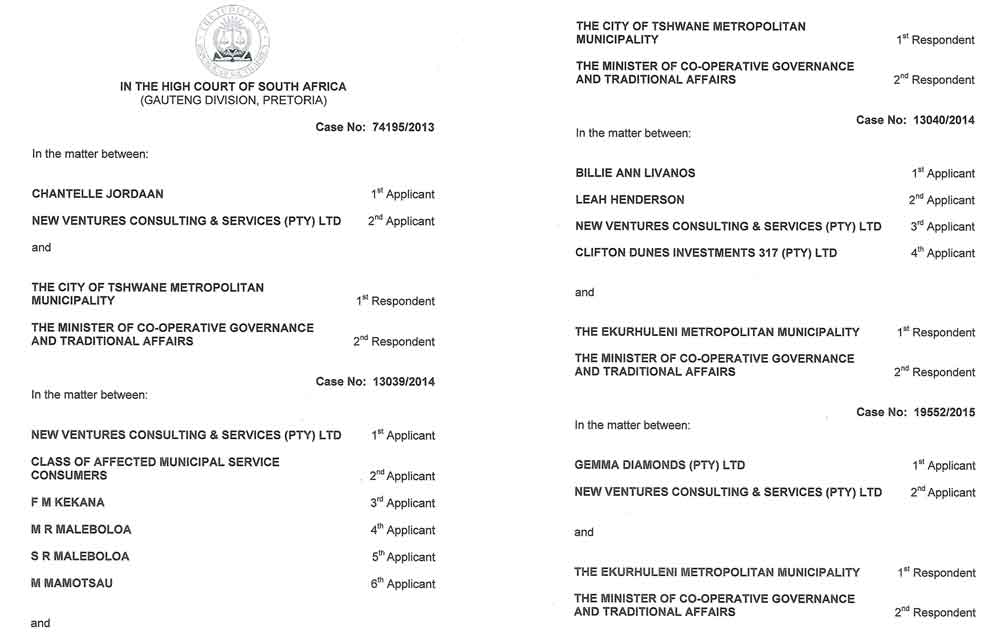
Read more: Jordaan Constitutional Court case
New Ventures Clients Return — and a Larger Fight Begins
All of the individuals involved in these cases were not random parties or acted alone.
They were clients of New Ventures who had previously approached Livanos for help when they were faced with high municipal rates and taxes clearance figures during their property transfers. At the time, their matters had been carefully worked through, their accounts had been corrected, miraculous savings and reductions created on their high clearance figures, and their properties had been successfully transferred.
In some cases, this had been done years earlier.
But after the new legal developments following the Mathabatha judgment, everything changed again.
Suddenly, these same clients were being told that they were still responsible for old municipal debts — some dating back many years, and often linked to previous owners.
In simple terms, the problem they believed had already been resolved came back again.
Not Only Clients — But Personal Exposure Too
At the same time, this did not only affect past clients.
Properties linked to New Ventures Properties, as well as properties involving Livanos and his family members, were also affected. What had once been completed and settled transactions were now being questioned again.
This meant that Livanos was once again directly in the firing line — both personally and through his business.
A Widespread Problem Across Many Properties
Because municipalities could look back many years and apply these claims broadly, a large number of property owners were suddenly at risk.
This created a situation where municipalities could effectively target current owners for historic debts, even if those debts had nothing to do with them.
It was a serious and growing problem, affecting multiple properties and many different people at the same time.
Taking Responsibility for Clients
As these issues started coming up again, many of the people affected — including Chantelle Jordaan, FM Kekana and others — turned back to Livanos for help.
They had trusted him before, and now they were facing an even bigger problem. At this point, Livanos made a very important decision. He decided that his clients would not have to face this situation on their own.
A Commitment That Went Further Than Expected

New Ventures stepped in to take on the legal fight — but this time, it went much further than simply assisting or advising.
Livanos made the decision not to charge his clients for this process.
He took on the matters at no cost to them, and more importantly, took responsibility for the risks involved.
What This Meant in Simple Terms
This meant that:
- the clients were not paying for the legal process
- they were not carrying the financial risk of the court cases
- they were not exposed to potential legal costs if things went wrong
Instead, that burden was taken on by Livanos and New Ventures.
In simple terms, he stood between his clients and the problem, carrying the pressure on their behalf.
The Scale of the Risk
This was not a small decision.
It meant taking on:
- the cost of running multiple court cases
- the stress and time involved in long legal battles
- the risk of potentially losing and being responsible for legal costs
- the reputational responsibility of standing behind the outcome
At the same time, his own properties and family interests were also affected, which made the situation even more serious.
Honouring a Promise
This was ultimately about keeping his word.
These were clients who had trusted him in the past, and when the problem returned, he made the decision that he would stand by them and not let them down — no matter how difficult the situation became.
What It Meant to Indemnify Clients
In South African law, when someone indemnifies another person, it means they take on the risk in their place. If something goes wrong, the responsibility does not fall on the client — it falls on the person who has given the indemnity. In this case, that meant Livanos and New Ventures stood behind their clients completely. If the legal battles failed, the financial consequences, the costs, and the risks would not have been borne by the clients, but by him.
This was not just support or guidance — it was a full assumption of responsibility. It meant putting his own resources, reputation, and financial stability on the line to protect others. That is what made this moment so significant: it was not just about solving a legal problem, it was about standing in front of it and carrying it on behalf of those who trusted him.

A Careful and Deliberate Legal Strategy
The way the law works means that a court case must always be brought by someone who is directly affected by the problem.
That is why names like Chantelle Jordaan appear as the first applicants in these matters. They were the people whose properties and rights were being affected, and the court requires that kind of direct involvement.
But behind these cases, there was a carefully planned approach.
These matters were not random or unconnected. Each case was part of a bigger picture. Livanos and New Ventures looked at how best to challenge the problem step by step, using real cases to test the law and move it forward.
It was not just one case. It was a series of cases, built over time, each one adding to the next, slowly strengthening the position and bringing the legal questions closer to a final answer.
High Court Success — and Continued Resistance
These cases were first taken through the High Court.
In each instance, the outcomes were in favour of New Ventures clients and property owners, confirming that the municipalities’ approach could not be applied in the way they were attempting.
However, this did not end the dispute.
The municipalities did not accept these court decisions easily. They continued to challenge them and took the matters further.
The reason for this was simple.
This approach gave municipalities a very powerful tool. Instead of having to chase the original person who owed the money — which can be difficult and time-consuming — they could simply claim the debt from whoever currently owned the property.
In practical terms, this made debt collection much easier for them. They did not need to track down past owners or follow the normal collection processes. They could place pressure on the current property owner, who often had no choice but to deal with the problem.
Because of this, the stakes were very high. The municipalities had a strong reason to keep this system in place, which is why they continued to fight these cases and take them further through the courts.
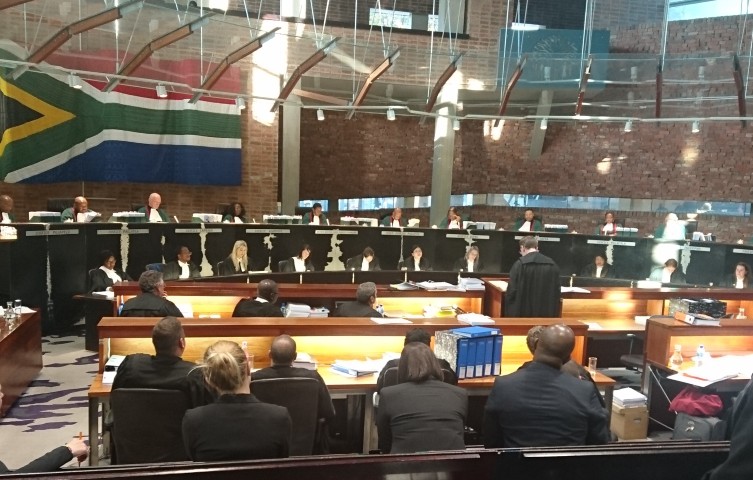
The Constitutional Court — One Final Decision
The Final Step — Taking the Fight to the Highest Court
Eventually, these matters were brought together and, through Livanos honouring his promises to protect his clients, made their way to the Constitutional Court — the highest court in South Africa.
A Promise Honoured
This was not something that happened by chance.
Livanos had made a commitment to his clients — many of whom had trusted him years earlier when he helped them resolve high municipal rates and taxes clearance figures during their property transfers. When the problem returned and they were once again placed at risk, he made the decision that he would stand behind them and not allow them to face the situation alone.
Taking on the Full Burden
In doing so, he took on the full weight of the legal battle.
This included:
- the stress of ongoing court cases
- the financial pressure of running multiple matters
- the risk of legal costs and potential losses
- the reputational responsibility of standing behind the outcomes
At the same time, these matters also affected his own properties and those linked to his family, making the situation both professional and deeply personal.
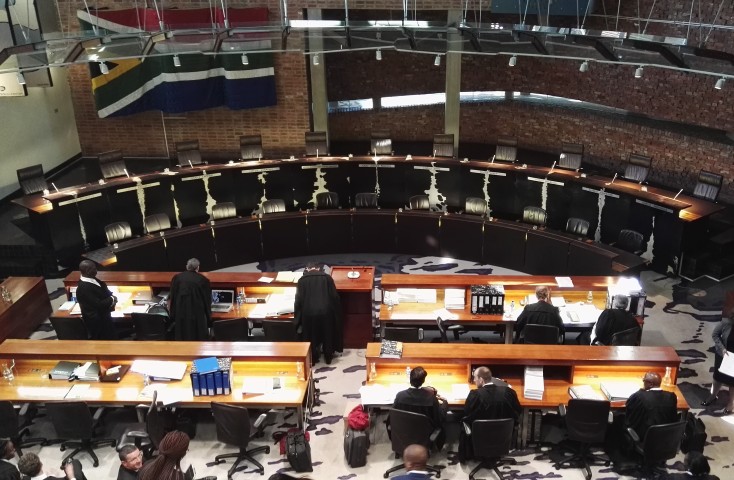
Read more: Landmark ruling
Building the Case Over Time
The matters were carefully built up over time, moving through the High Courts and eventually being brought together into a single, decisive hearing at the Constitutional Court.
A Decision That Affected the Whole Country
At this level, the court had to finally decide how the law should be applied — especially when it came to whether current property owners could be held responsible for old municipal debts that were not theirs.
The outcome brought much-needed clarity to an issue that had created uncertainty across the entire country, affecting property owners, buyers, sellers, banks and municipalities alike.
Strengthening the Case at the Highest Level
As the matter reached its final stage in the Constitutional Court, the stakes had become extremely high.
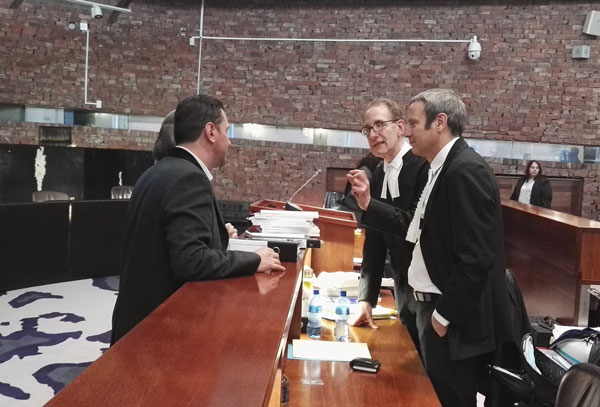
At this point, Livanos made the decision to strengthen the legal team by bringing in one of South Africa’s most respected advocates, Advocate David Unterhalter, to present arguments before the court. This ensured that the case — built over many years — would be presented at the highest possible level.
Additional Parties Join at the Final Stage
During this final stage, a number of organisations applied to join the proceedings as amicus curiae, also known as “friends of the court”.
In simple terms, these are parties who are not directly involved in the case, but who believe the legal issues are important enough that they want to provide input or perspective to assist the court.
The following parties were allowed to be admitted in this role:
- TUHF Limited
- Banking Association South Africa
- eThekwini Metropolitan Municipality
- Johannesburg Attorneys Association
These organisations joined the matter at a very late stage, once the case had already reached the Constitutional Court.
A Case Built Over Many Years
It is important to understand that by the time these parties became involved, the matter had already been underway for many years.
The legal groundwork — including the identification of the problem, the development of the arguments, and the progression through multiple High Court proceedings — had already taken place through the efforts of Livanos and New Ventures.
These additional participants contributed at the final stage, offering broader industry perspectives, but they were not involved in the years of work that led up to this point.
Why the Stakes Were So High
The reason so many parties were interested in the outcome is clear.
If the case had not succeeded, the consequences would have been far-reaching across South Africa. Property owners could have continued to face claims for historic municipal debts going back many years. This would have created serious uncertainty in the property market, affecting buyers, sellers, banks, attorneys, and financial institutions alike.
In a very real sense, the outcome of this case had the potential to impact the entire property system in the country.
What Could Have Happened if Our Case Was Lost
If the case had not succeeded, the consequences could have been severe and far-reaching across South Africa.
Impact on Property Owners
Property owners would likely have continued to face claims for historic municipal debts going back many years — even debts that had nothing to do with them.
Impact on Banks and Mortgage Lending
But the impact would not have stopped there. Banks and mortgage bondholders could have been placed in an extremely difficult position. If municipalities were allowed to claim old debts at any time, it would have created uncertainty about whether a property was truly free of past obligations when it was transferred.
Why This Threatened the Banking System
Banks rely on the property as security when they grant a home loan. If that property can later be affected by unknown historic debts, then that security becomes unreliable.
In simple terms, banks could end up lending money against properties that are not as secure as they appear, exposing them to unexpected risk.
This could have made banks far more cautious, making it harder for people to obtain home loans.
Impact on Property Rights and the System as a Whole
For property owners and bondholders, this would have created serious uncertainty. It would mean that even after transfer, ownership could still be affected by past debts, weakening confidence in the entire property system.
Why Organisations Like BASA and TUHF Became Involved
This is one of the reasons why organisations such as the Banking Association South Africa (BASA) and TUHF Limited chose to become involved at the Constitutional Court stage.
They understood that the outcome of the case was not only important for individual property owners — it had the potential to affect the stability of the entire property finance and lending system in South Africa.
The Bigger Picture
In a very real sense, the stakes went far beyond any single case.
The outcome had the potential to influence how property ownership, lending, and financial risk are understood across the entire country.
A Landmark Victory — Changing the Law
After years of relentless effort, the matter reached its final conclusion at the Constitutional Court.

View the judgment: New Ventures | Jordaan Section 118
In a unanimous decision by all 11 judges, the court ruled in favour of the position advanced through the work led by Livanos and New Ventures.
This was not just another court outcome.
It was a moment that placed this work firmly into the legal history of South Africa.
The highest court in the country had now confirmed how the law should be applied, bringing clarity to an issue that had affected property owners across the entire nation.
From Risk to Vindication
For Livanos, this decision meant that everything he had taken on — the financial risk, the legal battles, the stress, and the responsibility of standing behind his clients — had finally paid off.
The indemnities he had given, the promises he had made, and the years of persistence were all tested at the highest level — and ultimately proven to be correct.
What began as a fight to survive had now become a complete vindication.
A Small Firm Against Powerful Institutions
This case was often seen as a classic example of David versus Goliath.
On one side was a small, family-run business — New Ventures.
On the other side were large municipal institutions, supported by significant resources and authority.
Despite the imbalance, the case was carried forward step by step, over many years, until it reached the highest court — and succeeded.
National Attention and Recognition
Following the Constitutional Court decision, the matter attracted widespread national attention.
The story was covered across:
- major television news platforms
- national and regional newspapers
- a wide range of media outlets
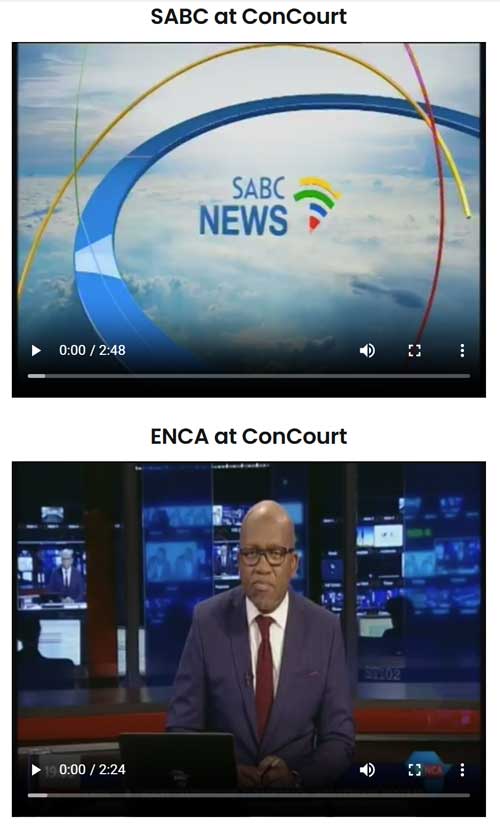
View the media and news coverage
The scale of the coverage reflected the importance of the case and the impact it had on the property industry and the broader public.
New Ventures Clients Pre‑Dating the Constitutional Court Hearing and Judgment:
All of the individuals and entities listed below were longstanding clients of New Ventures Consulting & Services (now Municipal Debt Specialist), having been represented by New Ventures well before the commencement of the litigation and long prior to the Constitutional Court hearing and judgment.
In each instance, the clients had acquired properties in circumstances where New Ventures had audited and reduced municipal charges attached to those properties.
The relevant municipalities sought to hold these property owners liable for historical debts incurred by previous owners.
New Ventures acted on behalf of each of these clients individually, challenging such liability through separate applications in the High Court. Each matter was pursued independently, on its own merits, and all were successfully advanced by New Ventures one case at a time. When the issues in dispute were ultimately referred to the Constitutional Court,
New Ventures continued to act for these same clients throughout the proceedings.
These matters included, among others, the following High Court applications in which New Ventures appeared as an applicant alongside its clients:
- Case No: 74195/2013 – Chantelle Jordaan & New Ventures Consulting & Services
- Case No: 13039/2014 – FM Kekana, MR Maleboloa, SR Maleboloa, M Mamotsau & New Ventures Consulting & Services
- Case No: 13040/2014 – Billie Ann Livanos, Leah Henderson, Clifton Dunes Investments 317 (Pty) Ltd & New Ventures Consulting & Services
- Case No: 23826/2014 – Oak Plant Rentals (Pty) Ltd, Stepping the World (Pty) Ltd & New Ventures Consulting & Services
- Case No: 19552/2015 – Gemma Diamonds (Pty) Ltd & New Ventures Consulting & Services
Accordingly, the clients represented in these matters—being Chantelle Jordaan; FM Kekana; MR Maleboloa; SR Maleboloa; M Mamotsau; Billie Ann Livanos; Leah Henderson; Clifton Dunes Investments 317 (Pty) Ltd; Gemma Diamonds (Pty) Ltd; Oak Plant Rentals (Pty) Ltd; and Stepping the World (Pty) Ltd—were all clients of New Ventures long before the Constitutional Court proceedings, and remained represented by New Ventures throughout.
A Natural Evolution — A Name That Reflects the Work
As the work continued to grow, and as more people became aware of these issues, it became clear that the name New Ventures did not fully explain what the business actually did.
Many property owners experiencing high municipal rates and taxes clearance figures did not immediately realise that this was exactly the type of problem the firm solved.
For that reason, a decision was made to adopt a name that clearly reflected the service being provided.
The Introduction of Municipal Debt Specialist
The business was rebranded as:
Municipal Debt Specialist
This name makes it clear, in simple terms, what the focus is — assisting property owners with complex municipal charges, especially those relating to high rates and taxes clearance figures required for property transfers.
A Victory That Went Beyond One Case
The Constitutional Court judgment did more than just resolve a legal dispute.
It brought an end to years of uncertainty, pressure, and risk — not only for Livanos and his clients, but for property owners across the country. What had started as a fight to survive had, over time, grown into something far bigger: a challenge that helped bring clarity to an entire area of South African law.
For Livanos, it marked the end of a long and difficult journey.
A journey that involved taking on risks that most would avoid.
Standing behind clients when the outcome was uncertain.
Carrying the financial, legal and personal pressure for years.
And in the end, seeing that decision — to stand firm and not walk away — confirmed at the highest level.
It was a moment of complete vindication.
But more importantly, it was a moment that left a lasting mark — not just for one company, but for the entire property industry.
What This Means Today
Municipal Debt Specialist exists because of something real that was experienced firsthand.
It didn’t start as an idea or a plan. It came from a situation that had to be solved — under pressure, in real time, with real consequences if it went wrong. Over the years, that experience has been shaped and tested through actual transactions, through difficult situations, and through the courts when necessary. What exists today is not based on theory, but on what has been worked through and proven in practice.
At the centre of it all is a simple point:
When a property is being transferred, the amount that must be paid to the municipality should be the amount that is legally required — nothing more, and nothing that should not be there.
For many people, when they are faced with high or unexpected municipal rates and taxes clearance figures, it can feel confusing and overwhelming. It is often not clear where to start or what is correct.
But the important thing to understand is that these situations are not new.
They have come up before. They have been questioned. They have been worked through carefully, and in many instances, they have already been tested at the highest level.
That is what this story ultimately reflects.
A Story That Still Matters Today
Looking back, this was never meant to become what it did. It started with one problem, on one set of properties, at a time when there were no clear answers and very little guidance. It was about trying to make sense of a situation that simply did not add up.
But over time, that problem grew. It affected more properties, more people, and eventually reached a point where it had to be tested properly — not just in practice, but in the courts.
What came out of that process is something far bigger than any single transaction or client. It is experience that was built the hard way, under pressure, over many years. And for anyone who finds themselves facing high municipal rates and taxes clearance figures today, there is something important to understand:
This is not the first time this situation has happened.
The challenges are real, and they can feel overwhelming — but they are not untouchable. They have been worked through before, questioned properly, and dealt with using the law as it should be applied.
That is the difference.
What We Do Today
Municipal Debt Specialist assists clients by:
- Reviewing and reducing municipal rates clearance figures
- Identifying incorrect or unlawful charges
- Ensuring compliance with legal requirements
- Facilitating property transfers
- Supporting attorneys, property professionals and financial institutions
Our Core Principle
Clients should only ever pay what is legally required — no more and no less — when obtaining a municipal rates clearance certificate.
Further reading and resources
For those who would like to explore the legal background in more detail, the Constitutional Court judgment referred to in this article can be accessed below:
Jordaan and Others v City of Tshwane Metropolitan Municipality and Others [2017] ZACC 31
Decided: 29 August 2017
Heard: 23 May 2017
This matter was heard by the Constitutional Court of South Africa and dealt with the interpretation of section 118(3) of the Municipal Systems Act, particularly whether municipalities can hold current property owners liable for historic debts of previous owners after transfer.
The case involved multiple applicants and respondents, including:
- Chantelle Jordaan
- New Ventures Consulting & Services (Pty) Ltd
- FM Kekana
- MR Maleboloa
- SR Maleboloa
- M Mamotsau
- Billie Ann Livanos
- Leah Henderson
- Clifton Dunes Investments 317 (Pty) Ltd
- Gemma Diamonds (Pty) Ltd
- Oak Plant Rentals (Pty) Ltd
- Stepping the World (Pty) Ltd
The municipalities involved included:
- City of Tshwane Metropolitan Municipality
- Ekurhuleni Metropolitan Municipality
Additional organisations participated as friends of the court (amicus curiae), including:
- TUHF Limited
- Banking Association South Africa (BASA)
- eThekwini Metropolitan Municipality
- Johannesburg Attorneys Association
The judgment was delivered unanimously by the Constitutional Court and clarified that certain municipal claims do not survive transfer of property in the way previously asserted.
You can view the full judgment here:
https://www.saflii.org/za/cases/ZACC/2017/31.html
LEGAL AND FAST MUNICIPAL CLEARANCE REDUCTIONS ON ALL TYPES OF SALES:
If you have purchased or sold a property and/or have any kind of high Clearance figures when transferring a Property, please contact the Municipal Debt Specialist to assist you.
We have a FREE RATES HELP DESK that you are most welcome to use.
We are able to assist with Municipal Clearance Figures on all kinds of Property Transfers, i.e. Deceased Estates, Liquidations / Sequestrations, Normal Sales, etc.
Discover More About Our Expertise and Success:
- Read a bit more About Us.
- For more information about our services or to discuss your needs, please Contact Us.
- Our team is ready to offer expert support and ensure a smooth, efficient property transfer process.
- Please also consider our NO OBLIGATION & FREE Rates Clearance Help Desk offering.
- Why not read what other clients have to say about us under our Client Testimonials.
- Do you know what a Clearance Figure or Certificate even looks like or is? Please visit our Frequently Asked Questions page.
- Last but not least please check out our amazing News & Updates in the National Media on our massive wins, acclaims and interesting articles and blogs.

Advanced Living Solutions

Audioholics